
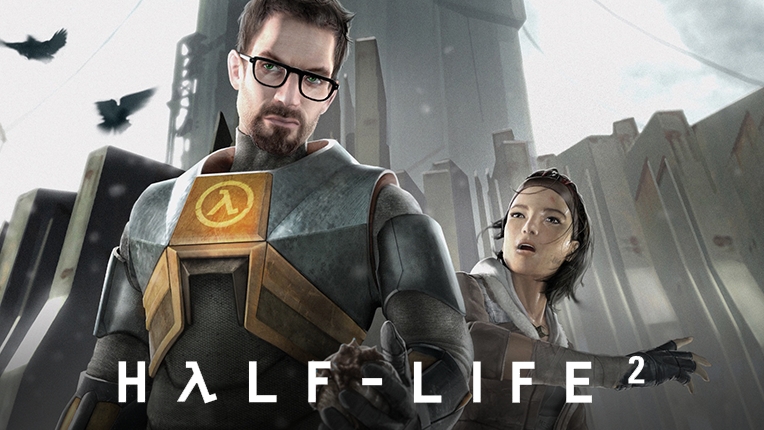
On November 16th, 2004, Half-Life 2 was released for personal computers by American game studio, Valve. Along with the monumental release, the much-anticipated game also came with what was going to be one of the largest (if not the largest) digital games marketplace, Steam. In its wake, the physical media landscape on PCs would change forever.
While HL2 might have been the first big release that Steam had, the platform itself did not launch on the same day as HL2. In fact, Steam initially launched a year earlier, on September 12th, 2003. Before HL2, Counter-Strike was one of the main games to play on it. While Half-Life 2 did come in the physical form, shipping with several discs in the box, Steam was required during installation and also required to play.
It should be noted that once the game was installed and activated through Steam online, it could be run in an offline mode. But this was a big upset to many gamers at the time. People hated the stipulation of having to activate their games online. Anti-piracy and DRM on PCs had come in many different forms up until that point, coming in such forms as CD keys and copy-protected discs.
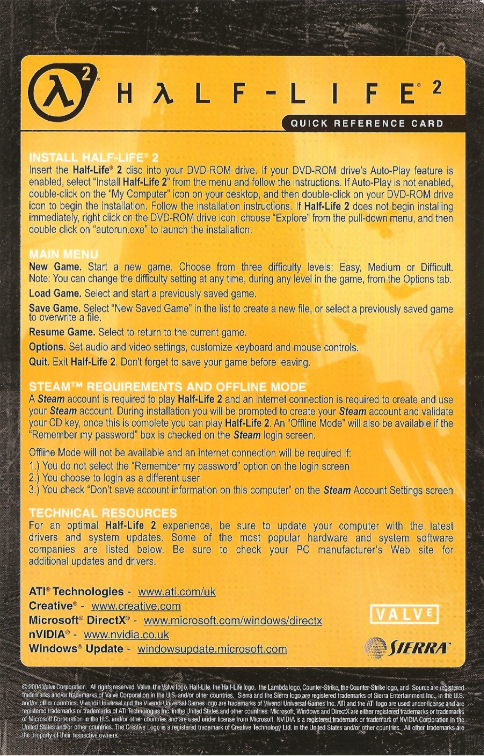
At the time, having to create an account for a fledging gaming service was quite novel and unprecedented. And this requirement was also highly disliked and criticized by many. The New York Times would say that it had “the worst installation process I have ever seen”, stating that it was buggy, headache inducing and that the installation took two hours. Others from around the internet strongly remember the many downsides, frustrations and other unlikable aspects of this new system Valve was introducing.
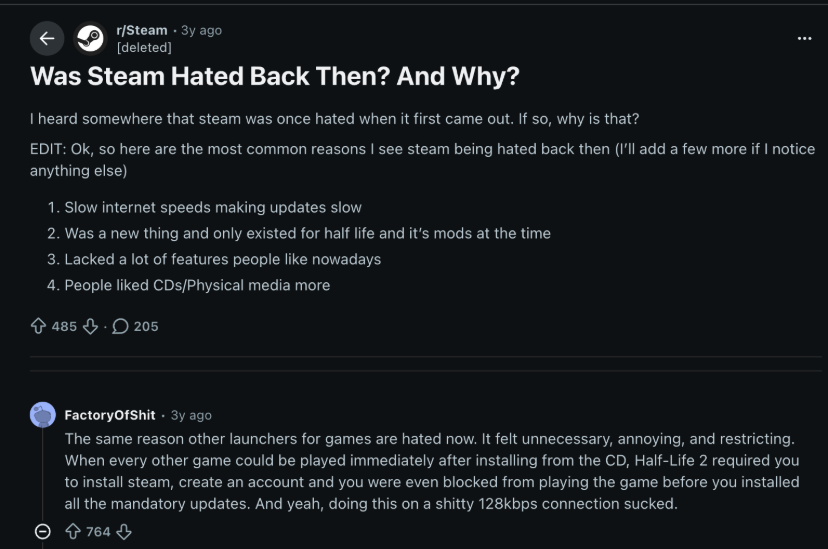
A lot of Reddit posts reminiscing on the sentiment of Steam back in the 2000s explain the strong dislike quite concisely: that it felt unnecessary and restrictive, as can many forms of 3rd party or forced anti-piracy methods placed on digital games of today.
Slowly but surely, Steam became the best place to buy PC games digitally, and physical media died because of lack of sales, brick and mortar stores shrinking their shelf space for games, and probably most of all: convenience. Little did we know, that having Steam forced upon us would be a slippery slope, one that would lead to an all-digital future for PC games.
And now, gaming consoles follow Steam’s path, with physical media starting to die out as well, albeit much slower. Depending on how you look at it, some consoles have been poised to do this long before Sony’s announcement that new PlayStation game discs will longer be available starting in 2028.
Console manufactures may play big a role in how physical media is represented, but Rockstar Games made the decision to ship one of the most anticipated games of all time Grand Theft Auto 6, without a physical disc. While it would be available on retail shelves, the box itself would only come with a code voucher to redeem on your respective platform. This practice in itself is not uncommon and also became normalized over time as digital game sales increased and the decreased presence of physical media. It is a notable decision to do so because of the expectation Rockstar would provide a disc edition of the game; physical versions of Grand Theft Auto and Red Dead Redemption games are well-known for coming with large maps and instructional materials.
Microsoft is no stranger to limiting disc production or trying different tactics to hinder the benefits of physical media on their consoles this generation and in years past, but at the same time has championed the medium through the Xbox Backwards Compatible Games Library, simply allowing users to install applicable Xbox 360 and original Xbox game discs into their Xbox One or Series S/X consoles. It should also be noted that this method requires an internet connection to perform.
However, no one should forget how Microsoft has already tried to give us a peek at an all-digital future back when the Xbox One was being launched. Despite Microsoft’s setbacks and compromises on the issue, they also seem to be adding a layer of complexity with a disc-to-digital program, which entered a beta at the end of August. According to the Xbox Wire:
“Players have spent decades building their XBOX libraries. Some games were purchased on disc. Some were purchased digitally. Many span multiple generations of hardware. Our goal is to make it easier for those libraries to move forward with players.”
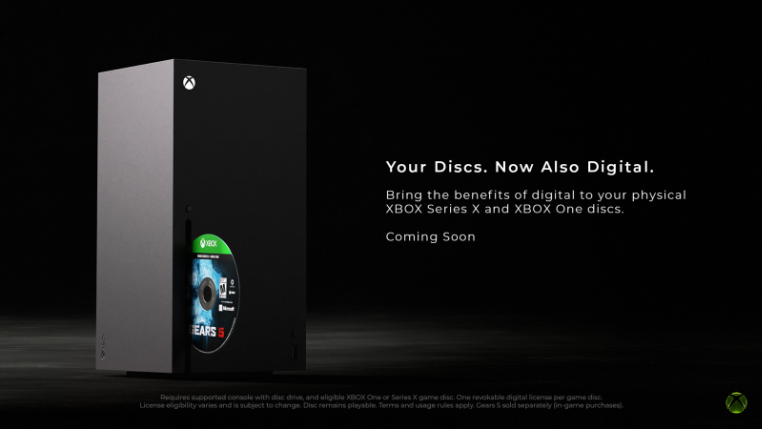
Again, as of the time of this posting, it is in a beta phase with mixed results as not every single game you put in the disc drive is going to work. Overtime, success rates for digital license redemption will increase on the platform. Nevertheless, is an interesting option for players, especially when it’s looking like the next generation of consoles will not be shipping with a disc drive.
What is clear is that physical media is still a powerful medium for some markets. For example, interest and sales in vinyl records have increased, known as the Vinyl Revival. Used games sales have surged over the past decade and with 2028 looming just around the corner, another sharp increase and interest in the used physical market is most certainly going to happen.

